About Us
Technical Characteristics of Wet-Process Paper-Based Friction Plates
Views : 68
Update time : 2025-11-19 17:10:00
(1) Material composition of wet-type paper-based friction linings
Wet-process paper-based friction linings are also a type of polymer composite material manufactured through specific production processes using fibre-reinforced materials, organic binders, and friction performance modifiers.Their base material typically employs base paper,hence the designation ‘paper-based'.
① Fibre-reinforced materials
Wet-process paper-based friction linings incorporate fibre reinforcement materials such as glass fibre,aramid fibre,and carbon fibre.Glass fibres offer high wear resistance and favourable cost-effectiveness,predominantly used in wet paper-based friction linings for the aftermarket.Aramid fibres exhibit high-temperature resistance,wear resistance,and efficient,stable torque transmission.Carbon fibres are fibrous materials formed by high-temperature heating of organic fibres or low-molecular-weight hydrocarbon gas feedstocks,featuring high carbon content and numerous advantages,though their production process is complex and costly.The wear performance of wet paper-based friction linings varies according to the composition and content of the reinforcing fibres.②Binder
Wet-type paper-based friction linings employ two types of bonding agents.The first is a polymeric material that firmly bonds the paper substrate to the backing,preventing cracking and delamination during service to ensure reliable operation.This adhesive requires a substantial contact area during bonding to guarantee complete adhesion,whilst also possessing robust heat resistance,excellent wetting properties,and high adsorption strength.Another type of binder is a polymeric material that,through self-curing,tightly interlinks the various fibres and friction performance modifiers within the paper-based substrate to form a network structure.This binder must ensure sufficient strength to enable the wet-type paper-based friction lining to withstand adequate pressure,while also providing adequate elasticity to prevent rigid contact when the wet-type paper-based friction lining engages with its mating steel plate.
③ Friction Modifier
The primary function of friction performance modifiers is to comprehensively regulate paper-based friction linings,enhancing manufacturing process performance and product quality to better meet transmission functional requirements under diverse operating conditions.The type of friction performance modifier,formulation composition,particle shape, and size all exert significant influence on the performance characteristics of paper-based friction linings.As the performance gains obtained by adding a single friction modifier are relatively modest,multiple friction modifiers are typically blended to achieve favourable overall performance characteristics.
(2) Principal technical characteristics of wet-type paper-based friction linings
The operational process of wet paper-based friction linings is primarily divided into three stages:the compression stage,the mixed surface contact stage, and the pressed contact stage. During the compression stage,lubricating oil flows into the interstitial spaces between the friction lining and its mating steel plate as they draw closer. With increasing pressure,the oil is progressively compressed to form a thin oil film,causing friction to gradually rise.This stage constitutes fluid lubrication.During the mixed surface contact stage,lubricating oil is expelled from the pores due to increased bonding pressure.When the oil film thickness falls below the height of the micro-asperities on the paper-based material surface,these micro-asperities make contact with the mating steel plate,transitioning into the mixed lubrication stage.In the tight contact stage,lubricating oil within the pores continues to be squeezed out,resulting in increased mechanical contact between the friction lining and the mating steel plate.The mixed lubrication stage concludes,transitioning into the boundary lubrication stage,where the coefficient of friction further increases.During the aforementioned operational process,the repeated motion of wet paper-based friction linings results in certain wear phenomena,including thermal wear, adhesive wear,abrasive wear,and fatigue wear.Thermal wear refers to the continuous separation and re-engagement of the friction lining with the steel plate,where substantial heat energy generated by friction causes high-temperature decomposition,oxidation, and sublimation of the paper-based material,leading to material degradation.
Adhesive wear occurs when micro-protrusions on the surface of paper-based materials undergo plastic deformation under significant stress.At elevated temperatures, molecular interactions cause the contacting surfaces to bond,resulting in adhesive wear. Abrasive wear arises when fillers within the paper-based material form particles and surface protrusions after resin curing.These protrusions are abraded during friction,leaving residues between the friction plate and mating surface.Fatigue wear occurs when relative sliding between friction and counter-friction plates causes stress concentration and plastic deformation within the contact zone. Under prolonged,repetitive action, fatigue cracks may initiate at vulnerable points on the paper-based material surface.Concurrently, repeated thermal stresses accelerate crack initiation and propagation.
相关新闻
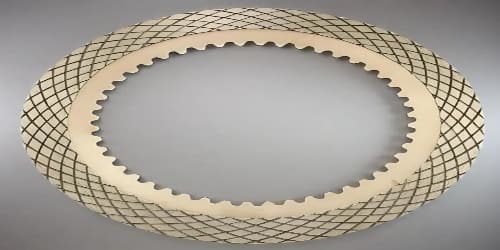 What performance tests are required for wet clutch friction plates?
Dec 16,2025
Wet clutch friction discs are critical for transmission performance and durability. This guide details essential performance tests—friction coefficient analysis (μ-v, μ-p, μ-T), durability & wear life simulation, thermal fade/recovery, mechanical strength, and lubricant compatibility—conducted per SAE/JIS/OEM standards. Ensure your clutch components meet rigorous quality benchmarks for smooth shifting and long-term reliability in demanding applications.
 What consequences may arise from the deterioration of friction plates within a bulldozer's transmission?
Dec 15,2025
Friction plates are critical to a bulldozer’s transmission, controlling speed and power output. Damaged or worn plates lead to unstable operation, accelerated wear of gears and bearings, increased downtime, and higher long-term costs. This article explains why timely replacement is essential for safety, performance, and extending your equipment’s lifespan.
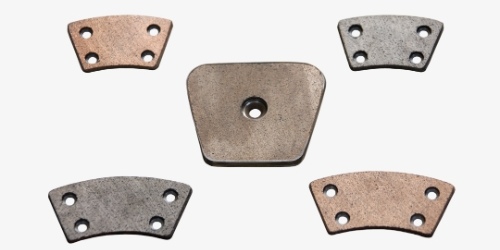 A Casual Discussion on Brake Pad Friction Materials
Dec 12,2025
A vehicle's braking system is as critical as its engine—your ultimate safety relies on the friction material within your brake pads. This article explores the science behind friction materials, explaining how complex formulations—comprising grinding fillers (e.g., zirconium silicate), wear reducers (graphite), and functional fillers—work together to balance performance factors like friction coefficient, noise, wear, and heat resistance. We break down common formulations (semi-metallic, ceramic, low-metallic, hybrid) and their ideal applications, debunking myths like judging quality by magnet attraction. True performance depends on R&D expertise and tailored formulations, not just material presence.
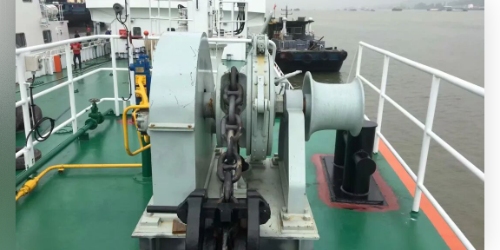 Prevent Downtime! Marine Anchor Brake Band: Fault Diagnosis, Repair & Proactive Maintenance Solutions
Dec 08,2025
Marine windlass brake lining is a critical safety component for anchoring operations. This article provides a comprehensive overview of its key components (body, wheel, system, adjustment device), core functions in chain tension control and stability, common fault diagnosis methods (wear, system malfunction, overheating), step-by-step repair & replacement procedures, and essential preventive maintenance practices. Supported by real-world case studies, this guide offers valuable insights for ship operators and maintenance crews to ensure system reliability and prevent downtime.